

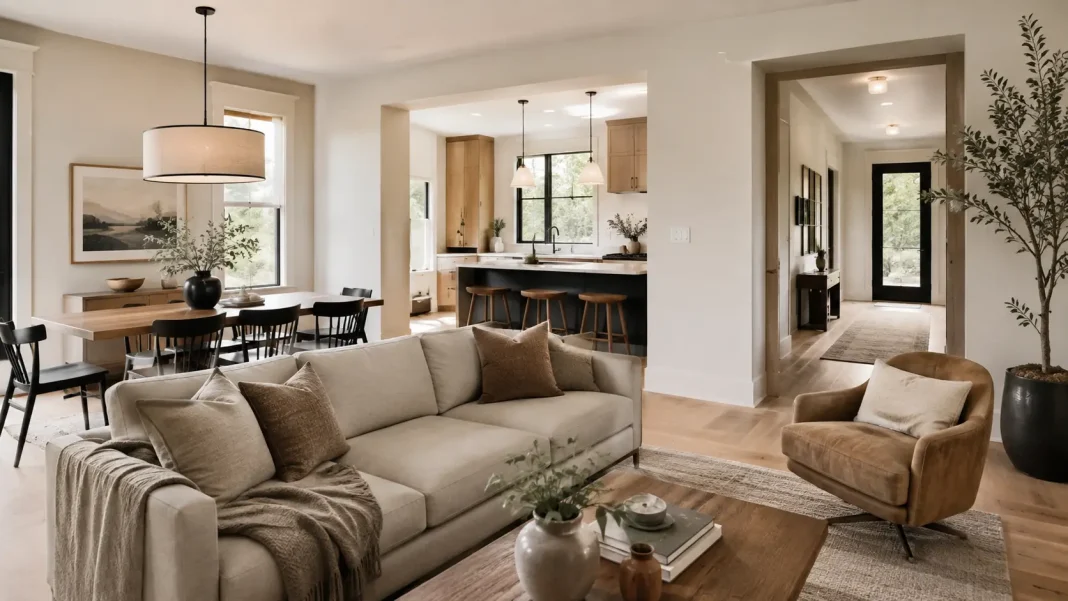
Making a house feel like a home takes effort. It takes a conscious effort in terms of channelling a theme and a sense of style across the building, making disparate rooms feel like natural extensions of each other.
Establishing a consistent home design theme requires an understanding of fixed elements, overall anchorage, colour psychology and more.
This article will explore the principles of home interior design that every new homeowner or renovator should keep in mind when trying to create a cohesive living space. Follow these guidelines and make your home into a space that really makes sense.
Figure Out the Concept Clearly
 Before you start buying furniture or installing new internal doors, think about what you actually want the place to look like. You can mix elements across different interior design styles, but establishing some limitations will ensure the process upholds direction.
- Build a mood board for the entire house. Using a page like Pinterest or Canva is great for finding images that represent various rooms, looking for common denominators in texture and mood.
- Set three words that describe how you want the in-home design to feel. For example, you might want “Bright, Minimal, Vintage or Eclectic” to define the atmosphere you establish.
Start with a proper concept, then the rest of your decisions should feel more natural.
Colour Continuity Rules
Your home design interior theme needs to be directed by a smart sense of colour. You don’t just need to paint every room the same colour, but there should be a natural flow between one space and the next
- One dominant colour should be used for the main walls, large rugs and cabinetry
- A secondary colour can be applied to accent walls, large furniture, curtains and trim
- An accent colour can be used for cushions, lighting fixtures and small decor items
Across these statement colours, there should also be a neutral that you use for hallways, landing areas and ceilings.
This is the visual palette cleanser that dwellers need between rooms. You can also switch secondary and accent colours around across rooms to create a more interesting thread.
Fixed Element & Materials Continuity
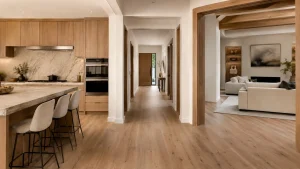 Much like with colour, interior design for home continuity should be powered by standardised elements. Similarly, it’s also important to apply repetition principles for materials across the property.
- Flooring should be maintained across the level of the home. Wood floors are well-suited to the high-traffic ground floor (main living floor), whereas the top or bedroom floor can be more suited to consistent carpet. Consistency needs to be matched with comfort.
- Hardware and metals should be kept consistent, with finishes like brushed brass and matte black working great for things like door handles, light switches and cabinetry pulls.
- Doors, trims, skirting boards, frames and architraves should all be consistent in terms of style and colour.
- If mixing wood types across the property, try to keep the undertone consistent. Cool, ashy tones should not be sullied by warm, reddish cherries.
- Texture is vital in both a visual and tactile sense for in-home design consistency. If you choose some statement materials, like rattan or raw linen, you should repeat them across different rooms.
It can also be wise to compare your fixed elements and materials to your paint colours to create complementary expressions of tone.
Make Your Home Design Coherent
By balancing major elements and colour consistency, all directed by an overarching theme, you can make your home feel more yours. Establish a clear flow in terms of visuals and physical movement, and enjoy the feeling of existing in a property that just… makes sense.
Author Profile

- Blogger by Passion | Contributor to many Business Blogs in the United Kingdom | Fascinated to Write Blogs in Business & Startup Niches |
Latest entries
 FinanceOctober 3, 2026When Is the Right Time to Sell Your Shares?
 FinanceSeptember 5, 2026Mistakes To Avoid When Selling Your Shares
 LifestyleAugust 27, 2026Five Reasons You Should Keep a Healthy Work-Life Balance for Your Mental Health
 CareerAugust 27, 2026Functioning Alcoholics in the Workplace: Find People Who Are Struggling