

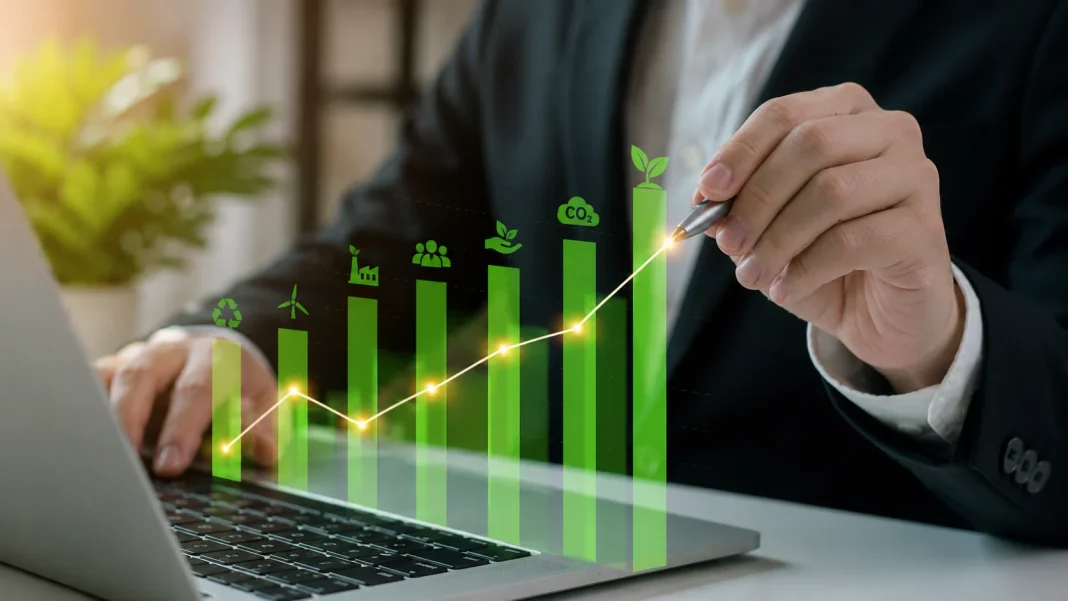
Sustainable growth has become a critical objective for UK businesses operating in an increasingly competitive and unpredictable environment.
Companies are no longer measured solely by revenue growth; they are also judged on resilience, efficiency, customer loyalty, environmental responsibility, and long-term value creation.
The businesses that consistently succeed are those that balance profitability with adaptability and strategic planning.
The most effective strategies that help UK companies achieve sustainable growth include:
- Embedding sustainability into core business strategy
- Improving operational efficiency through automation
- Strengthening customer retention and loyalty
- Building resilient energy and supply chains
- Accessing sustainable finance and growth funding
- Investing in people, leadership, and innovation
- Using data-driven decision-making to manage risk and opportunities
Why Is Sustainable Growth Now a Priority for UK Companies?

The UK business environment has become increasingly complex, with organisations facing economic uncertainty, rising costs, changing customer expectations, and rapid technological advancements.
As a result, many businesses are shifting their focus from short-term gains to long-term, sustainable growth.
Key Reasons Sustainable Growth Matters:
- Long-Term Stability: Helps businesses remain resilient during economic challenges.
- Customer Expectations: Consumers increasingly support responsible and ethical brands.
- ESG Focus: Investors and lenders consider environmental, social, and governance performance.
- Regulatory Readiness: Supports compliance with evolving business and environmental regulations.
- Competitive Advantage: Encourages innovation and strengthens market positioning.
By embedding sustainability into their operations and decision-making, companies can build stronger foundations for future success.
Businesses that balance growth, innovation, and responsibility are likely to be better positioned for long-term prosperity in 2026 and beyond.
How Can UK Companies Build a Sustainable Growth Strategy Around Long-Term Value?
Creating a sustainable growth strategy requires businesses to move beyond quarterly targets and focus on generating lasting value for customers, employees, shareholders, and communities.
Defining Sustainable Growth Beyond Revenue
Many businesses mistakenly associate growth solely with increased sales. While revenue remains important, sustainable growth involves building a business model capable of maintaining profitability and competitiveness over time.
A sustainable growth strategy typically focuses on:
- Consistent profitability
- Strong customer relationships
- Efficient resource management
- Adaptability to market changes
- Responsible business practices
Companies that pursue these objectives often experience stronger resilience during economic downturns and greater long-term performance.
Aligning Growth Goals with Purpose, Profit and Resilience
Research consistently shows that organisations with a clear sense of purpose tend to outperform those focused exclusively on financial targets. Purpose helps guide strategic decisions, strengthens company culture, and improves stakeholder trust.
Businesses should ensure their growth objectives align with their broader mission while balancing financial performance and operational resilience. This approach helps create a framework for sustainable expansion without sacrificing long-term stability.
Strategy comparison table:
| Growth Approach | Short-Term Growth | Sustainable Growth |
| Primary Focus | Immediate revenue | Long-term value creation |
| Customer Strategy | Acquisition-focused | Retention and loyalty-focused |
| Investment Horizon | Short-term returns | Long-term resilience |
| Risk Management | Reactive | Proactive |
| Operational Planning | Rapid expansion | Scalable and efficient growth |
By prioritising value creation over quick wins, companies can build stronger foundations for future success.
What Role Does ESG Play in Helping UK Businesses Grow Responsibly?

Environmental, Social, and Governance (ESG) principles have become an important part of modern business strategy. Rather than being viewed solely as a compliance requirement, ESG is increasingly recognised as a driver of long-term growth, innovation, and operational efficiency.
Environmental initiatives such as reducing carbon emissions, improving energy efficiency, and minimising waste can help businesses lower costs while enhancing their reputation. Social initiatives support stronger employee engagement, customer trust, and community relationships, while good governance practices improve transparency and reduce business risks.
Many organisations now consider ESG performance when awarding contracts and selecting suppliers. By embedding ESG into their core strategy, businesses can strengthen competitiveness, unlock new opportunities, and support responsible growth.
How Can Operational Efficiency and Automation Support Sustainable Business Growth?
Operational efficiency remains one of the most effective ways to achieve sustainable growth. Businesses that streamline processes can improve productivity, reduce costs, and scale more effectively without significantly increasing resources.
Process Optimisation and Cost Control
Every organisation contains opportunities to eliminate inefficiencies. Regular reviews of workflows, procurement processes, inventory management, and customer service operations can reveal areas where resources are being wasted.
Key operational improvements often include:
- Standardising business processes
- Reducing manual administrative tasks
- Improving workflow visibility
- Eliminating duplicated activities
These improvements not only reduce costs but also improve service quality and employee productivity.
Scalable Systems Without Unnecessary Headcount Growth
Automation technologies allow businesses to scale operations more efficiently. Customer relationship management (CRM) systems, workflow automation tools, artificial intelligence solutions, and cloud-based platforms can handle increasing workloads without proportional staffing increases.
Operational efficiency opportunities:
| Area | Example Solution | Potential Benefit |
| Customer Management | CRM automation | Improved retention |
| Finance | Automated invoicing | Reduced administration |
| Marketing | Email automation | Better engagement |
| Operations | Workflow automation | Increased productivity |
| Reporting | Business intelligence dashboards | Faster decision-making |
Companies that invest strategically in technology can achieve growth while maintaining operational control and profitability.
Why Should UK Companies Focus on Customer Retention Instead of Only Acquisition?
While attracting new customers is important, sustainable growth is often driven by retaining existing ones. Acquiring new customers typically costs more than keeping current customers engaged and satisfied.
Loyal customers are more likely to make repeat purchases, provide referrals, and deliver higher lifetime value. They also offer valuable feedback that helps businesses improve products and services.
By focusing on customer retention and consistently delivering positive experiences, companies can achieve more predictable revenue, stronger profitability, and long-term business growth.
For businesses seeking broader insights into UK market trends, entrepreneurship, and growth strategies, resources available through ukbusinessjournals.co.uk can provide valuable industry perspectives and business intelligence.
How Can Energy Resilience and Supply Chain Planning Protect Long-Term Growth?

Building resilience in energy management and supply chain operations is essential for businesses seeking sustainable long-term growth. By reducing operational risks and improving efficiency, organisations can better prepare for economic, environmental, and market uncertainties.
Energy Audits, Smart Technology and Lower Operating Costs
Energy costs continue to present challenges for many UK businesses. Conducting regular energy audits can help identify inefficiencies and opportunities for savings.
Practical improvements may include:
- Installing LED lighting
- Using smart energy monitoring systems
- Upgrading equipment to energy-efficient alternatives
- Exploring renewable energy solutions
These measures can reduce operating expenses while supporting broader sustainability objectives.
Supplier Diversification and Climate Risk Management
Supply chain disruptions have highlighted the importance of resilience planning. Businesses that depend heavily on a single supplier or region may face greater vulnerability during periods of instability.
Diversifying suppliers, improving inventory visibility, and conducting supplier risk assessments can help reduce exposure to disruption. Organisations should also evaluate climate-related risks that could affect sourcing, transportation, and production activities.
What Funding, Grants and Sustainable Finance Options Can UK Businesses Explore?
Access to the right funding can support business growth, innovation, and sustainability initiatives. UK businesses can explore a variety of financing options, including traditional business loans, regional grants, innovation funding programmes, and government-backed support schemes.
Common Funding Options:
- Business Loans: Support expansion, equipment purchases, and operational growth.
- Sustainability Finance: Funding for low-carbon and energy-efficiency projects.
- Government Schemes: Various support programmes for eligible businesses.
- Regional Grants: Financial assistance for local development and investment.
- Innovation Funding: Support for research, technology, and new product development.
Businesses that present clear objectives and measurable outcomes often improve their chances of securing funding. Sustainable finance is becoming increasingly important as lenders and investors prioritise long-term growth and environmental responsibility.
How Can Leadership, Talent and Data Help Companies Stay Future-Ready?

Strong leadership plays a vital role in sustainable growth. Leaders set priorities, shape culture, and create the conditions necessary for innovation and adaptation.
Future-ready organisations recognise that growth depends heavily on attracting, developing, and retaining talented employees. A compelling Employee Value Proposition (EVP), ongoing training, and opportunities for career progression can improve engagement and reduce turnover.
Data is equally important. Businesses that use analytics effectively can identify emerging trends, monitor performance, and make informed decisions faster than competitors. Data-driven decision-making enables organisations to anticipate challenges rather than simply react to them.
Successful companies combine visionary leadership, skilled people, and actionable insights to remain agile in changing market conditions. This combination supports innovation, resilience, and sustainable long-term growth.
Conclusion
Understanding what strategies help UK companies achieve sustainable growth requires looking beyond revenue and focusing on long-term value creation.
Businesses that integrate ESG principles, improve operational efficiency, prioritise customer retention, strengthen supply chain resilience, access sustainable finance, and invest in leadership and talent are better positioned for lasting success.
In today’s evolving business environment, sustainable growth is not a single initiative but a comprehensive approach that balances profitability, responsibility, and resilience. Companies that embrace these principles can create stronger organisations capable of thriving well into the future.
Frequently Asked Questions
How can small UK businesses start planning for sustainable growth?
Small businesses should begin by assessing their current operations, identifying inefficiencies, improving customer retention, and setting measurable long-term objectives. Even small improvements can create a foundation for sustainable expansion.
What is the difference between business growth and sustainable business growth?
Business growth focuses on increasing revenue or market share, while sustainable business growth balances profitability with resilience, operational efficiency, customer loyalty, and long-term value creation.
Why is customer retention important for long-term profitability?
Retained customers often generate repeat purchases, higher lifetime value, and referrals. This makes retention more cost-effective than constantly acquiring new customers.
How can UK companies reduce costs while becoming more sustainable?
Businesses can improve energy efficiency, automate processes, reduce waste, optimise supply chains, and adopt technology solutions that lower operational expenses.
What are the best KPIs for measuring sustainable growth?
Useful metrics include customer retention rate, profit margin, employee retention, energy consumption, customer lifetime value, ESG performance indicators, and revenue growth.
How does digital transformation support responsible business expansion?
Digital technologies improve efficiency, automate repetitive tasks, enhance customer experiences, and provide data insights that support informed decision-making.
Can sustainable growth help UK companies attract investors?
Yes. Many investors now evaluate ESG performance, resilience, governance practices, and long-term growth potential when assessing investment opportunities.
Author Profile

- Blogger by Passion | Contributor to many Business Blogs in the United Kingdom | Fascinated to Write Blogs in Business & Startup Niches |
Latest entries
 FinanceOctober 15, 2026The First 30 Days of a Capital Raise: What to Build Before You Contact a Single Investor?
 BusinessOctober 8, 2026The Best Enterprise Marketing Agencies in London for Global Brands
 FinanceOctober 3, 2026When Is the Right Time to Sell Your Shares?
 FinanceSeptember 5, 2026Mistakes To Avoid When Selling Your Shares