


Table of Contents
Operating a growing business in London is a uniquely rewarding endeavour, but it demands an intense level of financial agility. Navigating a fast-paced, high-stakes market like the capital means that strategic capital allocation can quite literally make or break an ambitious small-to-medium enterprise (SME).
Amidst evolving economic landscapes, smart cash flow management has firmly overtaken traditional asset ownership as the primary driver of business resilience. But when scaling up operations, SME owners face a critical crossroads: do they buy their commercial fleet outright, or do they look for alternative financing models?
The traditional mindset dictates that buying equals control. However, outright vehicle ownership locks up vital cash in a rapidly depreciating asset. For forward-thinking London enterprises, capital preservation is the ultimate key to sustainable scaling, making vehicle leasing the only logical choice in the modern economy.
The Capital Preservation Imperative: OpEx vs. CapEx
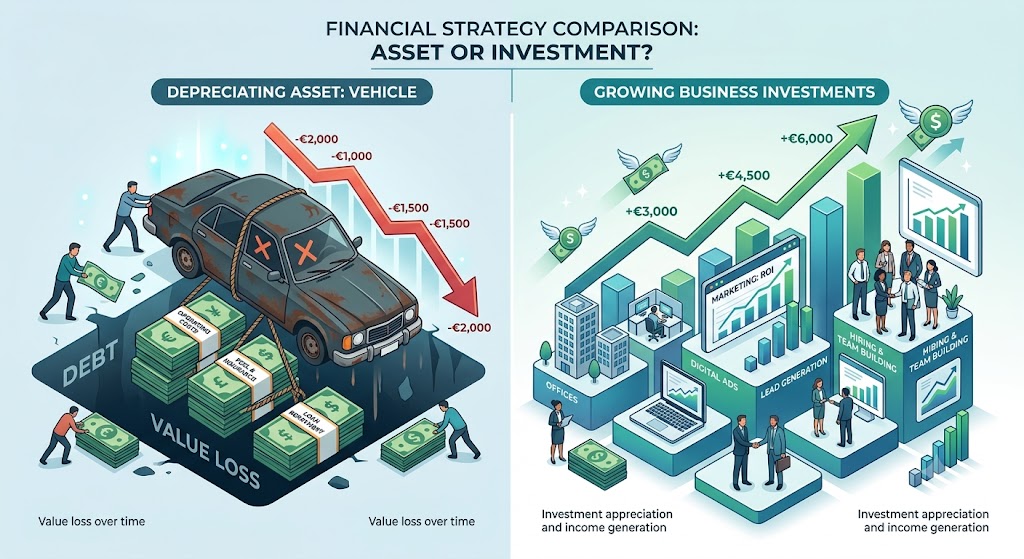
Purchasing a commercial fleet outright requires a heavy upfront capital expenditure (CapEx). For an expanding business, this sudden drain on cash reserves can be crippling. Even if a business chooses to secure traditional hire purchase loans, doing so frequently exhausts pre-approved bank credit lines, leaving little safety net for emergency reserves or unexpected market downturns.
The opportunity cost of sinking valuable cash into a depreciating asset is immense. Every single pound tied up in a vehicle’s metalwork is a pound that cannot be deployed into high-yield, growth-focused activities.
Whether that means hiring top-tier talent, launching aggressive marketing campaigns, investing in research and development, or securing larger commercial premises, your capital delivers a far better return when reinvested directly into your core business operations.
Transitioning to an operational expenditure (OpEx) model allows businesses to keep their cash fluid and ready to deploy at a moment’s notice.
In a competitive commercial hub like London, maintaining healthy liquid reserves is vital for scaling sustainably. Instead of tying up thousands of pounds in a depreciating asset upfront, companies are finding that procuring a large van through a commercial lease provides a much smarter alternative. It protects cash flow, allows for predictable forecasting, and leaves credit lines open for strategic business growth.
Unmasking the Hidden Costs of Fleet Ownership

Many business owners look solely at the purchase price when considering a vehicle buy, forgetting the financial iceberg lurking just beneath the surface. The reality of depreciation is brutal: a brand-new commercial vehicle loses a massive chunk of its value the moment it rolls off the forecourt. In today’s volatile automotive market, predicting the residual value of a vehicle four or five years down the line is nothing short of a gamble.
Beyond the initial purchase price, outright ownership continually exposes a business to unpredictable financial shocks. As a vehicle ages, the maintenance drain intensifies. From unexpected mechanical failures and expensive MOTs to the recurring cost of premium commercial tyres and routine servicing, these ad-hoc expenses wreak havoc on tight operational budgets.
Furthermore, downtime is lost revenue. When a self-owned van breaks down on the North Circular or stalls in Central London, the administrative burden falls entirely on your shoulders. Sorting temporary replacement vehicles, dealing with mechanics, and managing insurance claims distracts your operations manager from their primary responsibility: serving London clients and keeping contracts on track.
Maximising Tax Efficiencies and Budget Predictability
Certainty is a valuable commodity. Leasing a vehicle offers fixed monthly payments that remain entirely unchanged throughout the duration of the contract. Because inflation or market fluctuations cannot alter your contract terms, monthly and quarterly cash flow forecasting becomes exceptionally accurate, allowing finance teams to allocate resources with absolute confidence.
The tax advantages of leasing further strengthen the financial argument against outright purchasing. These can be broken down into two primary categories:
- VAT Reclamation: If your business is VAT-registered, you can usually reclaim 100% of the VAT on your monthly lease payments, provided the commercial vehicle is used solely for business operations. Even if the vehicle sees minor promotional or mixed usage, the VAT advantages remain highly favourable compared to purchasing.
- Corporation Tax Relief: Unlike the complex capital allowance depreciation calculations required for owned assets, lease rental payments can be treated as a direct business expense. This means they can be offset entirely against your taxable profits, significantly lowering your year-end Corporation Tax liability with minimal administrative fuss.
Urban Agility and London Regulatory Compliance

Operating a commercial vehicle in London means navigating one of the most strictly regulated transport environments in the world. Initiatives such as the Ultra Low Emission Zone (ULEZ) and rapidly evolving local sustainability targets mean that older, high-emission vehicles face heavy daily penalties that can quickly decimate an SME’s profit margins.
At the same time, automotive technology – especially within the electric vehicle (EV) sector – is evolving at a breakneck pace. Buying an EV fleet outright introduces an incredibly high risk of technology obsolescence. The battery ranges, charging speeds, and software capabilities of today will likely look primitive in three years’ time, leaving buyers holding assets with severely compromised resale value.
Leasing provides the ultimate solution for future-proofing your fleet. It allows London businesses to run brand-new, ultra-low or zero-emission vehicles that are fully compliant with the capital’s strict clean-air mandates. At the end of the contract (typically spanning two to four years), the business need only hand the keys back and upgrade to the latest, most efficient technology – completely bypassing the hassle and financial loss of selling an outdated asset on the open market.
Fuelling Expansion Through Capital Fluidity
True business growth in London isn’t measured by the depreciating physical assets sitting on your balance sheet, but by the agility, adaptability, and liquidity of your working business capital. Sinking cash into a fleet of vans restricts your ability to pivot, innovate, and capture new market opportunities when they arise.
Outright ownership creates unnecessary financial friction in an environment that demands absolute fluidity. But by opting for a flexible leasing model instead, London’s growing businesses can robustly protect their cash reserves, enjoy major tax perks, and drive away with a compliant, modern fleet custom-built for the unique demands of the capital.
Author Profile

- Blogger and Educator by Passion | Senior Online Media & PR Strategist at ClickDo Ltd. | Contributor to many Education, Business & Lifestyle Blogs in the United Kingdom & Germany | Summer Course Student at the London School of Journalism and Course Instructor at the SeekaHost University.
Latest entries
 Business TipsJuly 2, 2026Why Vehicle Leasing Beats Buying for London’s Growing Businesses
 BusinessFebruary 1, 2026Why Modern Warehouse Management is the Secret to UK Retail Growth
 BusinessDecember 2, 2025How to Build an Effective Progression Plan in Your Company
 BusinessOctober 24, 2025Legionella Risk Assessment: 5 Things Every Entrepreneur Needs to Know