


Table of Contents
A glass candle jar needs protection from impact and from other items in the parcel.
Its weight, shape and lid arrangement all affect the packing method.
Treat a decorative retail carton and a shipping system as separate requirements unless the design has been assessed for both.
1. Inspect the complete product

Check the jar, lid and label before packing. Record the dimensions and weight of the finished candle, including any accessories supplied with it.
Candle Boxes should hold the product securely without pressing against vulnerable edges. If a fitted support is used, make sure it suits the actual jar rather than a similar-looking sample with different dimensions.
2. Prevent direct contact
Separate multiple jars so they cannot strike each other. Keep loose lids or accessories from becoming moving objects inside the parcel.
Royal Mail’s fragile-item advice provides a useful starting point, but the product’s needs still require testing. A fragile label is not a replacement for physical protection.
3. Check the outer arrangement
Use an outer container appropriate for the packed weight and intended service. Keep cushioning consistent around the protected product and seal the parcel using a repeatable method.
Consider storage and weather conditions as well as breakage. A successful impact trial does not establish that a candle will tolerate every temperature encountered during transport.
4. Understand how the jar can move
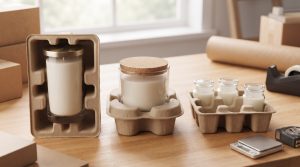
Look at the candle’s shape before choosing internal protection. A straight-sided jar, a tapered vessel and a heavy base can behave differently inside the same compartment. Measure the finished product at its widest points rather than using only the advertised capacity.
Check whether the lid remains securely attached during normal handling. If it is designed to lift off easily, the packing method needs to account for that movement. A loose lid can mark the jar or become a separate impact risk inside the parcel.
Consider the candle’s weight relative to nearby contents. A small accessory or printed card should not be used as a structural spacer. Give each component a defined position so the heavy jar cannot move towards it during transit.
5. Choose support that does more than fill space
Loose material may settle or shift, leaving the jar less restrained than it appeared at the packing station. Check the completed arrangement after ordinary handling and confirm that the product remains in its intended position.
A fitted insert also needs assessment. If it grips the jar too tightly, removal may be difficult or the surface may become marked. If it only touches a narrow area, pressure may concentrate in the wrong place. Review the contact points with the actual product.
Keep the lid, rim and other vulnerable areas clear of unnecessary pressure. The appropriate amount and type of cushioning depend on the product and distribution conditions. Avoid copying another seller’s arrangement without checking those differences.
6. Test single and multiple orders separately

A parcel containing two candles is not simply a heavier version of the single-candle order. The jars can strike each other unless the arrangement provides suitable separation. Review the complete layout, including how the dividers or supports stay in place.
Include the most demanding normal order in your trial. A large jar, a mixed-size pair or a gift set may expose weaknesses that the smallest product does not. Record the exact components used so a successful result can be reproduced.
Check the label and surface finish after unpacking as well as the glass. An unbroken candle can still arrive with scuffed printing, a displaced lid or an untidy presentation. These observations help distinguish cosmetic damage from structural failure.
7. Prepare a clear response to damaged arrivals
Ask customers for useful photographs without making the reporting process unnecessarily difficult. The outer parcel, internal arrangement and damaged area can provide different evidence. Follow the business’s replacement and disposal guidance for broken glass.
Review repeated incidents by jar size and packing version. If one format fails more often, investigate that combination rather than increasing filler in every order. Keep an approved reference sample and make staff aware that substitutions require a fit check. Reliable protection comes from a controlled system, not from the presence of a fragile sticker.
8. Validate the packing method
Send representative samples through the intended route and inspect both the glass and the presentation on arrival. Record the method used, including inserts and cushioning, so the result can be reproduced.
When commissioning custom packaging UK, share the candle weight, jar geometry and damage observations. Ask for a physical sample and review the complete parcel before a large run.
Train staff using photographs of the approved arrangement. If the jar supplier, lid or candle size changes, revisit the packing specification. Consistent preparation and product-specific testing provide a stronger basis for reliable shipping and delivery than simply increasing the amount of loose filler.
Author Profile

- Passionate content creator, contributor, writer and content marketing allrounder posting on various ClickDo blogs.
Latest entries
 Business StrategiesNovember 17, 2026How to Send Glass Candle Jars Without Breakage
 Press ReleasesMay 19, 2026VB Distribution Wholesaler Appoints Natalia Gosciniak as CEO to Boost Global Distribution Portfolio
 Business TipsJanuary 28, 2026Gamification in Business: How unique 2D Art Boosts Conversions
 Business TipsJanuary 8, 2026The Hidden Pitfalls Of Selling A Business