

In the rapidly evolving landscape of British retail, the “front end” of a business often gets all the glory.
Entrepreneurs spend countless hours perfecting their e-commerce storefronts, refining their social media presence, and curating the perfect product range.
However, as many growing UK SMEs have discovered, the most beautiful website in the world cannot save a business if the “back end” – specifically the warehouse – is failing to keep up.
As we move further into a decade defined by omnichannel shopping habits, the pressure on warehouse operations has reached fever pitch.
Customers no longer merely hope for fast, accurate delivery; they demand it. For a growing business, transitioning from a manual, paper-based system to a sophisticated digital workflow is no longer a luxury – it’s a prerequisite for survival.
The Changing Face of British Warehousing

The UK retail sector has faced a unique set of challenges recently, from shifting post-Brexit logistics to the skyrocketing costs of commercial space. For many small to medium enterprises (SMEs), the knee-jerk reaction to growth is to look for a bigger warehouse. Yet, in many cases, the problem isn’t a lack of space, but a lack of efficiency.
Traditional methods – using spreadsheets or printed pick-sheets – are prone to human error. “Mis-picks”, where a customer receives the wrong item, are not just a minor inconvenience; they’re a direct hit to the bottom line when you factor in return shipping costs and the potential loss of a customer’s lifetime value.
Accuracy: The Foundation of Customer Trust
In the world of e-commerce, your warehouse is the last point of contact before a product reaches the customer. Every error made in the warehouse is an error that the customer will see. This is where a dedicated Warehouse Management System (WMS) becomes invaluable.
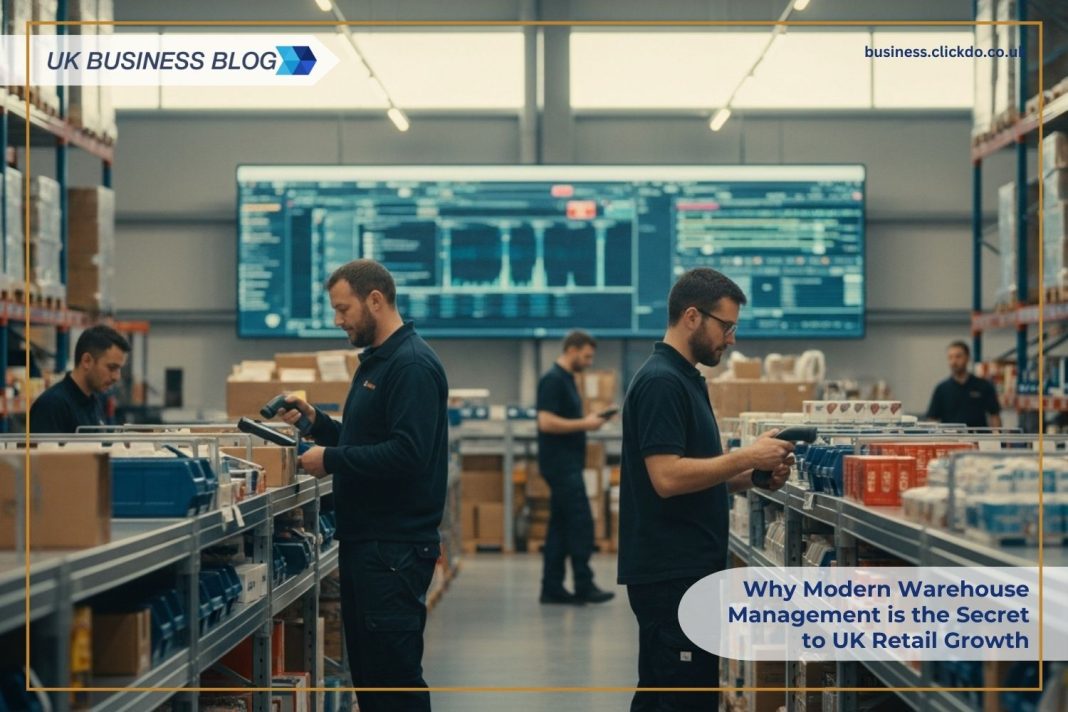
By implementing innovative software like StockHub from Futura Retail Solutions, retailers can move away from guesswork and towards precision. A robust WMS allows for real-time tracking of every single SKU, from the moment it arrives at “goods-in” to the second it’s dispatched. With barcode scanning technology, the risk of picking the wrong size or colour is virtually eliminated, ensuring that “first-time-right” fulfilment becomes the standard rather than the exception.
Maximising Space and Labour Efficiency

With warehouse rents in the UK reaching record highs, making the most of your existing footprint is essential. A modern system allows for sophisticated “bin management”. Instead of staff wandering aimlessly looking for items, a WMS can map out the most efficient picking routes, categorising stock into “Picking”, “Bulk”, and “Unpickable” areas.
This level of organisation does more than just save space; it saves time. Labour is often the highest variable cost in a warehouse. But by optimising pick routes and using handheld Android devices for real-time updates, staff can process more orders in fewer hours.
This is particularly crucial during seasonal peaks, such as Black Friday or the January sales, where the ability to scale operations quickly can make or break a fiscal year.
The Power of Omnichannel Integration
The modern British consumer is decidedly “omnichannel“. They might browse on their phone, buy on a laptop, and expect to return an item in a physical store. For a retailer, this creates a data nightmare if systems aren’t talking to each other.
A sophisticated warehouse solution bridges the gap between the digital and physical worlds. It ensures that if the last item of a popular line is sold in a physical shop, it’s immediately removed from the website’s available stock. This prevents the dreaded “out of stock” email that so often frustrates online shoppers. And by linking directly with courier platforms, the warehouse team can generate delivery notes and tracking numbers instantly, providing that transparency that modern shoppers crave.
Data-Driven Decision Making
One of the greatest advantages of digitising the warehouse is the wealth of data it generates. Business owners often struggle with “dead stock” – items that take up valuable shelf space but never move.
A WMS provides comprehensive reporting and analytics that highlight exactly what is selling and what isn’t. It allows managers to drill down into the details: who picked what, where the bottlenecks are occurring, and which stock levels need replenishing. This level of insight allows for smarter buying decisions, ensuring that capital isn’t tied up in stagnant inventory.
Going Paperless: A Step Towards Sustainability
Sustainability is no longer a niche concern for UK businesses; it’s a core part of your brand identity. Moving to a paperless warehouse by using mobile scanners and digital workflows reduces waste and aligns with the broader move towards eco-friendly business practices.
But beyond the environmental benefits, a paperless system is simply more agile. Updates are live and accurate, even when working in “offline mode” in areas of a warehouse where Wi-Fi might be patchy.
Future-Proofing Your Business
The leap from a small-scale operation to a national or international brand requires a foundation that can handle the weight of increased demand. Many businesses wait until their warehouse is in a state of chaos before looking for a solution. By then, the damage to the brand’s reputation may already be done.
The key to successful scaling is to implement systems that grow with you. Whether you’re managing a single stockroom or multiple distribution centres, the principles of accuracy, speed, and visibility remain the same.
Mastering the Engine Room of Modern Retail
In the competitive world of UK retail, the difference between a thriving business and one that is struggling often comes down to the efficiency of the “unseen” operations. By investing in the right technology, SMEs can level the playing field, offering the same level of service and reliability as major high-street giants.
Your warehouse shouldn’t be a black hole of mystery and manual errors. It should be the engine room of your business – a streamlined, data-driven environment that empowers your team and delights your customers.
As we look toward the future of retail, it’s clear that those who master their inventory will be the ones who lead the market.
Author Profile

- Blogger and Educator by Passion | Senior Online Media & PR Strategist at ClickDo Ltd. | Contributor to many Education, Business & Lifestyle Blogs in the United Kingdom & Germany | Summer Course Student at the London School of Journalism and Course Instructor at the SeekaHost University.
Latest entries
 BusinessFebruary 1, 2026Why Modern Warehouse Management is the Secret to UK Retail Growth
 BusinessDecember 2, 2025How to Build an Effective Progression Plan in Your Company
 BusinessOctober 24, 2025Legionella Risk Assessment: 5 Things Every Entrepreneur Needs to Know
 EmploymentSeptember 2, 2025Why Motorbike Accident Staff Claims are a Growing Business Risk